top of page

JOURNAL

A non-fungible token (NFT) is a unique, unrepeatable and indivisible digital asset that, linked to the development of blockchain technology and can't be regular cryptocurrencies, as each NFT has a distinct value, hence non-fungible.
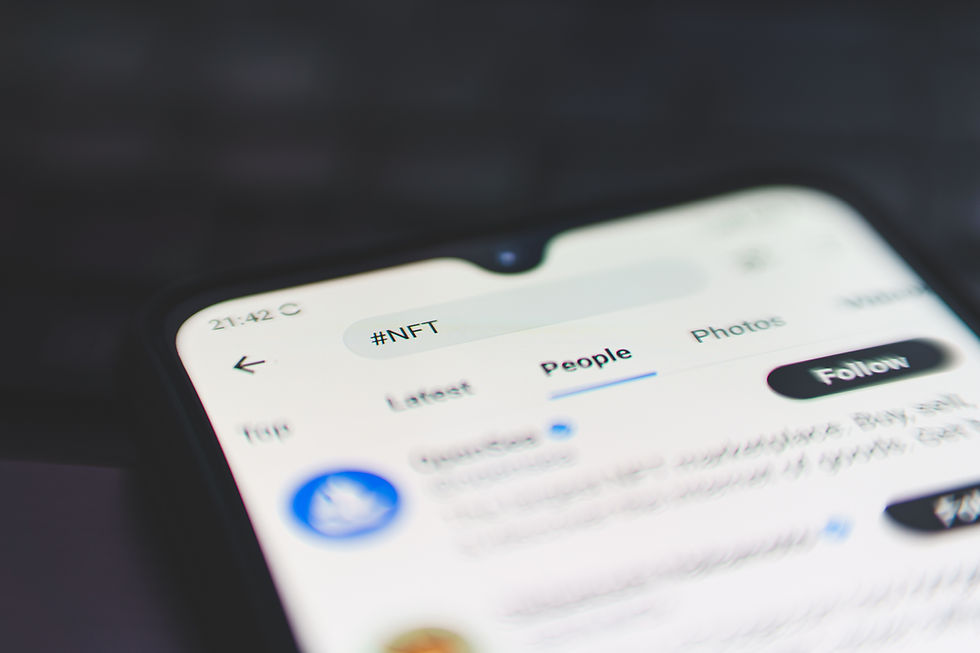

NFTs, which are unique digital assets that live on the blockchain, started to gain steam in the digital art world, but quickly expanded into luxury fashion, music, video games, social media and sports. Pop culture became saturated with NFTs throughout 2021, from X-ray images of William Shatner’s tooth, to a digital replica of Twitter founder Jack Dorsey’s first tweet and numerous memes preserved as NFTs.


Enter 2022, and NFTs are becoming even more mainstream. Samsung, for instance, unveiled plans to bring NFT marketplaces to its smart TVs ahead of the 2022 Consumer Electronics Show.


What’s the definition of an NFT?


NFT stands for a “non-fungible token,” which is guaranteed to be a one-of-a-kind digital asset that lives on the blockchain. The first NFTs were created in 2017 before the term even existed. Shortly after, crypto-kitties and crypto-sharks coined the term on the market and standardized Smart Contracts, a program that runs on the Ethereum blockchain which is like a “paper contract operated by a computer,” said Calderon.


“I think if there's a single takeaway, for the first time in history, we're able to prove that we own a digital asset,” he added.


How is an NFT different from Cryptocurrency?


NFT stands for non-fungible token. It’s built using the same kind of programming as cryptocurrency, like Bitcoin or Ethereum, but that’s where the similarity ends.

Physical money and cryptocurrencies are “fungible,” meaning they can be traded or exchanged for one another. They’re also equal in value—one pound is always worth another pound; one Bitcoin is always equal to another Bitcoin. Crypto’s fungibility makes it a trusted means of conducting transactions on the blockchain.

Each has a digital signature that makes it impossible for NFTs to be exchanged for or equal to one another (hence, non-fungible).


How do NFTs work?


At a very high level, most NFTs are part of the Ethereum blockchain. Ethereum is a cryptocurrency, like Bitcoin or Dogecoin, but its blockchain also supports these NFTs, which store extra information that makes them work differently from an ETH coin.


What’s the point of NFTs?


That really depends on whether you’re an artist or a buyer.


I’m an artist.

You might be interested in NFTs because it gives you a way to sell work that otherwise might not be much of a market for.


Also, NFTs have a feature that you can enable that will pay you a percentage every time the NFT is sold or changes hands, making sure that if your work gets popular and appreciates in value.


I’m a buyer.

One of the obvious benefits of buying art is it lets you financially support artists you like, and that’s true with NFTs (which are way trendier than, like, Telegram stickers). Buying an NFT also usually gets you some basic usage rights, like being able to post the image online or set it as your profile picture. Plus, of course, there are bragging rights that you own the art, with a blockchain entry to back it up.


I’m a collector.

NFTs can work like any other speculative asset, where you buy it and hope that the value of it goes up one day, so you can sell it for a profit.


Is every NFT is unique?


In the boring, technical sense that every NFT is a unique token on the blockchain. But while it could be like a Picasso where there’s only one definitive actual version, it could also be like a trading card, where there’s 50 or hundreds of numbered copies of the same artwork.


Who would pay hundreds of thousands of pounds for what basically amounts to a trading card?


Some people treat them like they’re the future of fine art collecting


(read: as a playground for the mega-rich), and some people treat them like Pokémon cards (where they’re accessible to normal people but also a playground for the mega-rich).


What are the most popular NFT marketplaces?

Once you’ve got your wallet set up and funded, there’s no shortage of NFT sites to shop. Currently, the largest NFT marketplaces are:

OpenSea.io: This peer-to-peer platform bills itself a purveyor of “rare digital items and collectibles.” To get started, all you need to do is create an account to browse NFT collections. You can also sort pieces by sales volume to discover new artists.

Rarible: Similar to OpenSea, Rarible is a open marketplace that allows artists and creators to issue and sell NFTs. RARI tokens issued on the platform enable holders to weigh in on features like fees and community rules.

Foundation: Artists must receive “upvotes” or an invitation from fellow creators to post their art. The community’s exclusivity and cost of entry—artists must also purchase “gas” to mint NFTs—means it may boast higher-calibre artwork. For instance, Nyan Cat creator Chris Torres sold the NFT on the Foundation platform.

It may also mean higher prices — not necessarily a bad thing for artists and collectors seeking to capitalise, assuming the demand for NFTs remains at current levels, or even increases over time.





Despite what most might think, a university degree doesn’t always equate to success – and not having one doesn’t mean you’re a failure either. As these businessmen show, their lack of a degree didn’t hinder them from becoming some of the most successful entrepreneurs in history.


Matt Mullenweg

Matt Mullenweg started WordPress, which now powers around 35% of the web, despite having dropped out of the University of Houston in favour of working at CNET Networks. Two year later he founded Automattic, the business behind WordPress.com, Akismet, Gravatar, Tumblr and more household internet brands. He currently manages the WordPress Foundation.


Mark Zuckerberg

Mark Zuckerberg, one of the most recognised names in tech, built Facebook into the world’s largest social network. Zuckerberg dropped out of Harvard in 2004, during his sophomore year, to work on Facebook full-time and remains its CEO to this day. He is now worth an estimated $86.3 billion.


David Karp

David Karp created Tumblr (which at its peak gained more than 500 million monthly users) despite never even graduating high school. He dropped out of Bronx Science high school in 2001 to be home schooled, and never received a high school diploma, instead working his way up through various tech firms until launching Tumblr in 2007. The platform was sold to Yahoo! in 2013 for a reported $800 million,


Pete Cashmore

At just 19, Pete Cashmore founded the hugely popular blog Mashable, but never attended college. Not having a college degree didn’t seem to affect this Scottish businessman though – Mashable was sold to Ziff Davis in 2017 for $50 million and, having left the company in 2018, Cashmore is estimated to be worth around £90 million.


Daniel Ek

At just 21, Daniel Ek co-founded Spotify after abandoning his degree in engineering at the Royal Institute of Technology in Sweden after just eight weeks. The company now has more than 217 million users worldwide and Ek, often referred to as the most powerful person in the music industry, is worth £4.5 billion.


Evan Williams

Co-founder and former CEO of Twitter, Evan Williams went to the University of Nebraska for only a year and a half before leaving to pursue a career in information systems. In 2006 he co-founded Twitter and later went on to start publishing platforms Blogger and Medium – he is now worth $2.2 billion.


Bill Gates

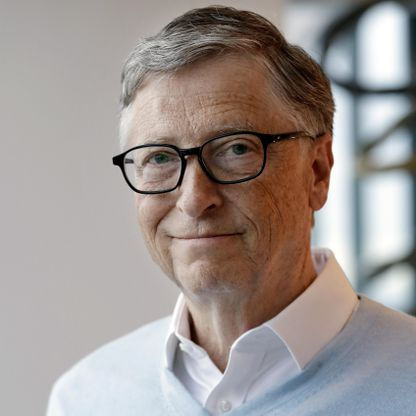
The billionaire co-founder of Microsoft, Bill Gates, dropped out of Harvard to focus on building his company. Proving that degrees aren’t always necessary, Bill Gates was consistently named the world’s richest man between 1995 and 2017, when he was overtaken by Amazon founder Jeff Bezos.


Richard Branson

Another example of a billionaire ‘drop-out’, Sir Richard Branson is one of the world’s most famous businessmen. The owner of Virgin dropped out of school at just 16 to start Student magazine, his first successful business venture. He bought his own Caribbean island when he was 24, was knighted in 1999 and is now said to be worth $4.1 billion.


Steve Jobs

Steve Jobs is another household name that will always wave the flag for college drop-outs. The late billionaire co-founder of Apple Inc. and Pixar dropped out of Reed College to start Apple after just 6 months – and we don’t need to tell you how well that worked out for him.


Steve Wozniak

Like his Apple co-founder (above), Steve Wozniak isn’t the proud owner of university degree. In fact he was expelled from his first college, the University of Colorado Boulder, for hacking the college’s computer system and later dropped out of Berkeley to work at Hewlett-Packard. He now sits on an estimated net worth of $100 million.


Walt Disney

Founder of the Walt Disney Company, Walt Disney (centre) himself dropped out of high school at 16 to join the war effort, eventually gaining his first job as a commercial illustrator at 18. He remains the record holder for most Academy Awards won by an individual – holding 22 from 59 nominations.


If you’ve never worked from home before, setting up a home office that is both comfortable and productive can be a daunting task. Simply putting your laptop on your kitchen table won’t cut it. To prosper, you need a base of operations to rival that of your well-equipped city office.

Of course, as well as being functional, once the coronavirus lockdown is over, your new home office will become a space to which you can invite clients. It should reflect your personality and taste, as well as your work ethic. This means no cliché artwork hanging behind your desk, no outdated tech and no using an old coffee table in lieu of a desk. Here’s our guide to creating the best home office…


The ultimate desk

This is the crowning glory of your office, the object that will define your business personality from the perspective of those who enter your workspace


Top lighting

It goes without saying that lighting is important. To keep things feeling fresh and well-lit, why not invest in an attractive desk lamp. This is an opportunity to introduce an element of charm to your workspace, so choose something that serves as a piece of visual furniture and will break up the room. This unusual lamp by award-winning designer Lee Broom is an eye-catching talking point and a signifier of your impeccable taste.


An executive chair

If you’re going to spend upwards of a third of every day sat at your desk, you’re going to need the sturdy comfort of a quality chair. Choose something that looks as luxurious as it is comfortable but don’t be fooled into thinking that a leather wingback is a good choice for doing serious work


A top notch coffee machine

As a successful self-starter, you’ll need caffeine to keep yourself on top form. But step away from the instant coffee, and buy a proper machine – something that looks just as good as the coffee it produces tastes. This innovative design from Joy Resolve incorporates an alarm clock and will automatically start brewing at a time of your choice. Working through that all-important coffee break is now a thing of the past.


An ergonomic tech stand

Even if you’ve invested in the finest desk and chair set-up, chances are you’re still not going to attain the heady levels of ergonomic comfort your professional office affords. A tech stand – which elevates your laptop to recommended eye level height – is a great solution but many of them are, well, less than chic.


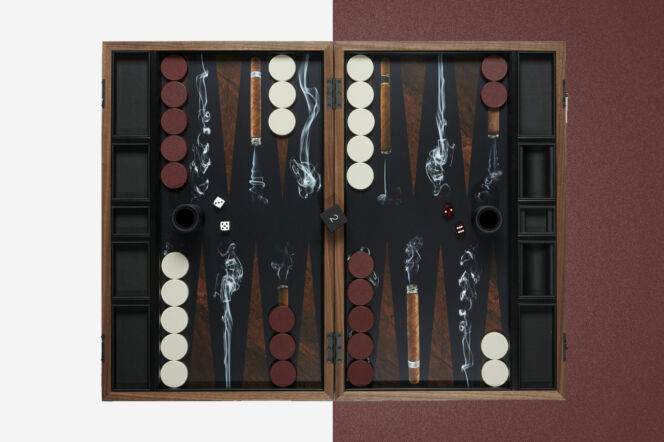
A stellar game

Your workspace should be somewhere to unwind and relax as well as a place of hard graft. If you don’t stock your space with a charming game to challenge potential business partners at


A secret bar

A desk globe marks you out as a man of the world. A desk globe that hides a bottle of fine Scotch marks you out as the kind of refined gent anyone would want to go into business with. Just imagine popping open this Bloomsbury Market number after signing an important contract…


bottom of page