- Modern Gentleman
- Sep 16, 2021
- 2 min read
After months of rumours, Apple has finally announced the iPhone13, succeeding the iPhone 12 series released last year.
A light update from last year’s iPhone 12, the new devices feature upgraded cameras and the company’s latest A15 chip, which it says is up to 50% faster than the competition.
The iPhone 13 family includes four models: iPhone 13, iPhone 13 mini, iPhone 13 Pro and iPhone 13 Pro Max – all feature the new processor, which Apple said would help users “absolutely fly through demanding workloads smoothly and efficiently”.
As far as battery life goes, all four phones also feature larger batteries, which the company says combined with the more power-efficient chip offers between 1.5 and 2.5 hours more use each day.
“iPhone 13 has a faster chip, faster 5G speeds, a brighter OLED display and the most advanced dual camera system ever in an iPhone, and with all these upgrades the iPhone 13 has a better battery life,” Apple’s vice-president Kaiann Drance said.
The upgraded cameras have enabled a reduction in the “notch” on the front of the devices, shrinking the black bar by 20%, and as for video, Apple is making a big deal out of its Cinematic mode that lets you selectively adjust focus and depth of field when post-processing, like Portrait mode for photos. The 13 Pro, meanwhile, lets you record and edit video in Apple’s ProRes codec on the phone itself, or you can export the ProRes file to Final Cut Pro on a Mac.
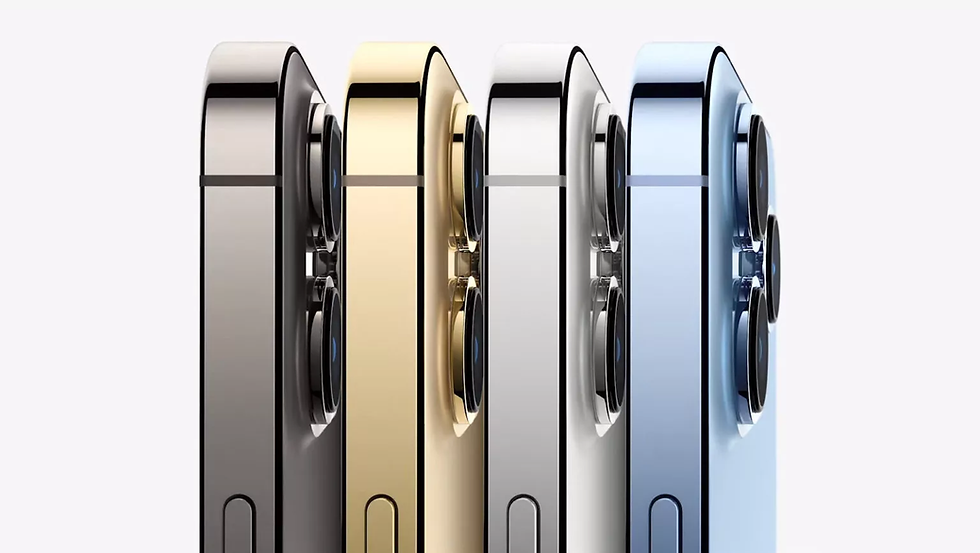
The iPhone 13 Pro and Pro Max contain three cameras and what Apple calls "its most advanced camera system yet".

Its premium models include a Super Retina XDR display and ProMotion - which delivers adaptive refresh rates of up to 120Hz. This allows for smoother scrolling, animations, and gameplay.
The iPhone 13 mini starts at £679, with the iPhone 13 starting at £779. The iPhone 13 Pro starts at £949, and the larger Pro Max £1,049.
The iPhone 13 was one of many reveals as part of Apple's "California Streaming" event.