top of page

JOURNAL

A non-fungible token (NFT) is a unique, unrepeatable and indivisible digital asset that, linked to the development of blockchain technology and can't be regular cryptocurrencies, as each NFT has a distinct value, hence non-fungible.

NFTs, which are unique digital assets that live on the blockchain, started to gain steam in the digital art world, but quickly expanded into luxury fashion, music, video games, social media and sports. Pop culture became saturated with NFTs throughout 2021, from X-ray images of William Shatner’s tooth, to a digital replica of Twitter founder Jack Dorsey’s first tweet and numerous memes preserved as NFTs.


Enter 2022, and NFTs are becoming even more mainstream. Samsung, for instance, unveiled plans to bring NFT marketplaces to its smart TVs ahead of the 2022 Consumer Electronics Show.


What’s the definition of an NFT?


NFT stands for a “non-fungible token,” which is guaranteed to be a one-of-a-kind digital asset that lives on the blockchain. The first NFTs were created in 2017 before the term even existed. Shortly after, crypto-kitties and crypto-sharks coined the term on the market and standardized Smart Contracts, a program that runs on the Ethereum blockchain which is like a “paper contract operated by a computer,” said Calderon.


“I think if there's a single takeaway, for the first time in history, we're able to prove that we own a digital asset,” he added.


How is an NFT different from Cryptocurrency?


NFT stands for non-fungible token. It’s built using the same kind of programming as cryptocurrency, like Bitcoin or Ethereum, but that’s where the similarity ends.

Physical money and cryptocurrencies are “fungible,” meaning they can be traded or exchanged for one another. They’re also equal in value—one pound is always worth another pound; one Bitcoin is always equal to another Bitcoin. Crypto’s fungibility makes it a trusted means of conducting transactions on the blockchain.

Each has a digital signature that makes it impossible for NFTs to be exchanged for or equal to one another (hence, non-fungible).


How do NFTs work?


At a very high level, most NFTs are part of the Ethereum blockchain. Ethereum is a cryptocurrency, like Bitcoin or Dogecoin, but its blockchain also supports these NFTs, which store extra information that makes them work differently from an ETH coin.


What’s the point of NFTs?


That really depends on whether you’re an artist or a buyer.


I’m an artist.

You might be interested in NFTs because it gives you a way to sell work that otherwise might not be much of a market for.


Also, NFTs have a feature that you can enable that will pay you a percentage every time the NFT is sold or changes hands, making sure that if your work gets popular and appreciates in value.


I’m a buyer.

One of the obvious benefits of buying art is it lets you financially support artists you like, and that’s true with NFTs (which are way trendier than, like, Telegram stickers). Buying an NFT also usually gets you some basic usage rights, like being able to post the image online or set it as your profile picture. Plus, of course, there are bragging rights that you own the art, with a blockchain entry to back it up.


I’m a collector.

NFTs can work like any other speculative asset, where you buy it and hope that the value of it goes up one day, so you can sell it for a profit.


Is every NFT is unique?


In the boring, technical sense that every NFT is a unique token on the blockchain. But while it could be like a Picasso where there’s only one definitive actual version, it could also be like a trading card, where there’s 50 or hundreds of numbered copies of the same artwork.


Who would pay hundreds of thousands of pounds for what basically amounts to a trading card?


Some people treat them like they’re the future of fine art collecting


(read: as a playground for the mega-rich), and some people treat them like Pokémon cards (where they’re accessible to normal people but also a playground for the mega-rich).


What are the most popular NFT marketplaces?

Once you’ve got your wallet set up and funded, there’s no shortage of NFT sites to shop. Currently, the largest NFT marketplaces are:

OpenSea.io: This peer-to-peer platform bills itself a purveyor of “rare digital items and collectibles.” To get started, all you need to do is create an account to browse NFT collections. You can also sort pieces by sales volume to discover new artists.

Rarible: Similar to OpenSea, Rarible is a open marketplace that allows artists and creators to issue and sell NFTs. RARI tokens issued on the platform enable holders to weigh in on features like fees and community rules.

Foundation: Artists must receive “upvotes” or an invitation from fellow creators to post their art. The community’s exclusivity and cost of entry—artists must also purchase “gas” to mint NFTs—means it may boast higher-calibre artwork. For instance, Nyan Cat creator Chris Torres sold the NFT on the Foundation platform.

It may also mean higher prices — not necessarily a bad thing for artists and collectors seeking to capitalise, assuming the demand for NFTs remains at current levels, or even increases over time.



It might seem strange to be making predictions about 2021, when it’s far from certain how the remainder of 2020 is going to play out. No-one foresaw the world-changing events of this year, but one thing is clear: tech has been affected just as much as every other part of our lives.


Another thing that is clear is that today’s most important tech trends will play a big part in helping us cope with and adapt to the many challenges facing us. From the shift to working from home to new rules about how we meet and interact in public spaces, tech trends will be the driving force in managing the change.

In many ways, Covid-19 will act as a catalyst for a whole host of changes that were already on the cards anyway, thanks to our increasingly online and digital lives. Things will just happen more quickly now, with necessity (long acknowledged as the mother of invention) as the driving force. Some will play their part in helping us to recover "normality" (whatever that means), while some of them will make it easier for us to understand and navigate a changed reality.


1. Artificial Intelligence (AI)

AI is undoubtedly one of the biggest tech trends at the moment, and during 2021 it will become an even more valuable tool for helping us to interpret and understand the world around us. The volume of data we are collecting on healthcare, infection rates, and the success of measures we take to prevent the spread of infection will continue to increase. This means that machine learning algorithms will become better informed and increasingly sophisticated in the solutions they uncover for us. 


During 2021 we can expect the tools we use to analyze these behavioral shifts to become more sophisticated and increasingly fit the budget and infrastructure requirements of more and more organizations.


2. Robotics, Drones, and Vehicle Automation

As the volume of passengers using public transport fluctuates from week to week, depending on local conditions, initiatives around self-driving vehicles will continue at an increasing pace. Driving efficiency across public transport networks will be a priority for service providers as well as civic authorities, where reducing human labor costs will help balance the uncertainty around customer demand.


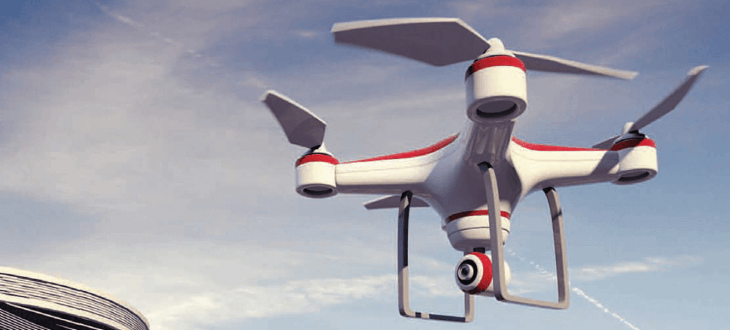
Drones will be used to deliver vital medicine and, equipped with computer vision algorithms, used to monitor footfall in public areas in order to identify places where the re is an increased risk of viral transmission.


3. The As-A-Service Revolution

“As-a-service” – the provision of services that we need to live and work through cloud-based, on-demand platforms – is the key that has put the other tech trends we talk about today in reach of anybody. It’s the reason why AI and robotics are a possibility for just about any business or organization, regardless of their size or budget.


As the ongoing pandemic rages around the world, we have clearly seen that companies that rely on cloud to provide scalable solutions as-a-service are prospering. In 2021 and beyond, this is going to become increasingly important and more possibilities will open up for everyone.  


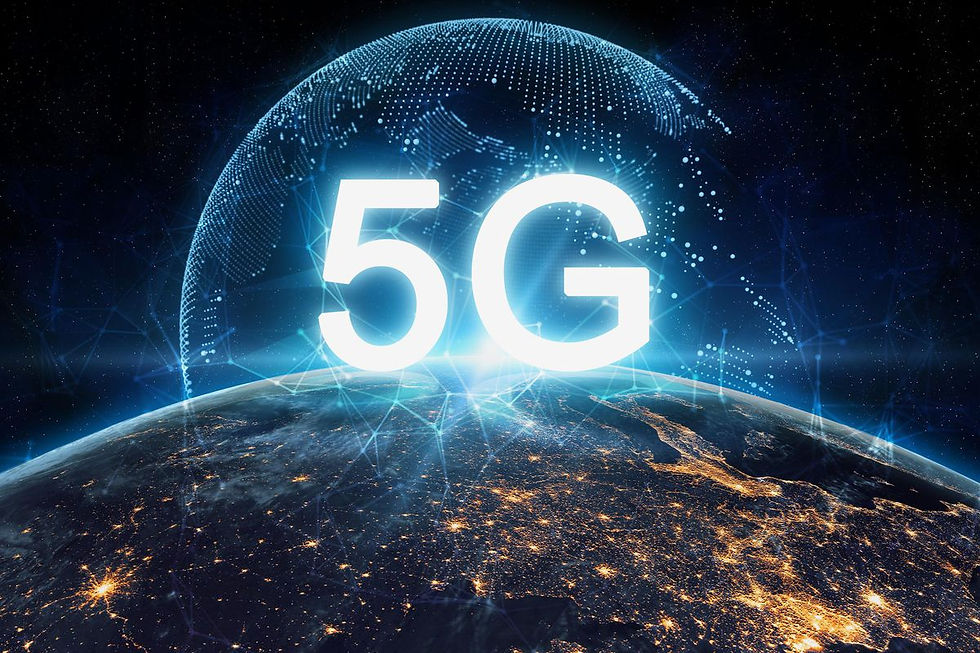
4. 5G and enhanced connectivity

Faster and more reliable internet doesn't just mean we can load webpages more quickly and spend less time waiting for videos to launch on Youtube. Each successive advance in mobile connectivity from 3G onwards has unlocked new use cases for the internet.

5G means that services relying on advanced technologies such as augmented reality and virtual reality (discussed below) as well as cloud-based gaming platforms like Google's Stadia or NVidia's GeForce Now become a viable proposition, anywhere at any time.


In short, 5G and other advanced, high-speed networks make all of the other trends we discuss here available anywhere, any time. Complex machine learning applications relying on real-time access to Big Data sources can be conducted in the field, via automation.


Initiatives like this will become increasingly important during 2021, where businesses look to increase automation across their workforces.


5. Extended Reality (XR) – Virtual and Augmented Reality (VR/MR).

These terms cover technology that uses glasses or headsets to project computer-generated imagery directly into the user's field of vision. When it is superimposed over what the user is viewing in the real world, it is AR. And when it is used to place the user into an entirely computer-generated environment, it is VR.


We will also see an increase in the use of VR and AR tools within education. This will reduce the need for us to work in crowded classroom conditions – if not totally, then at least in areas and during times when it is known that transmission rates are high.


And as more data on the conditions and manner in which viral transmission takes place becomes available, AR tools will be used to give out real-time warnings when we move through areas where the infection is known to have spread. Even simple steps like reminding us to wash our hands when we touch a door handle in a public space or issuing an alert when a device senses that we have touched our face without washing our hands, could help to save lives and stop us spreading illness around the real-word environments we inhabit and move through.


bottom of page